
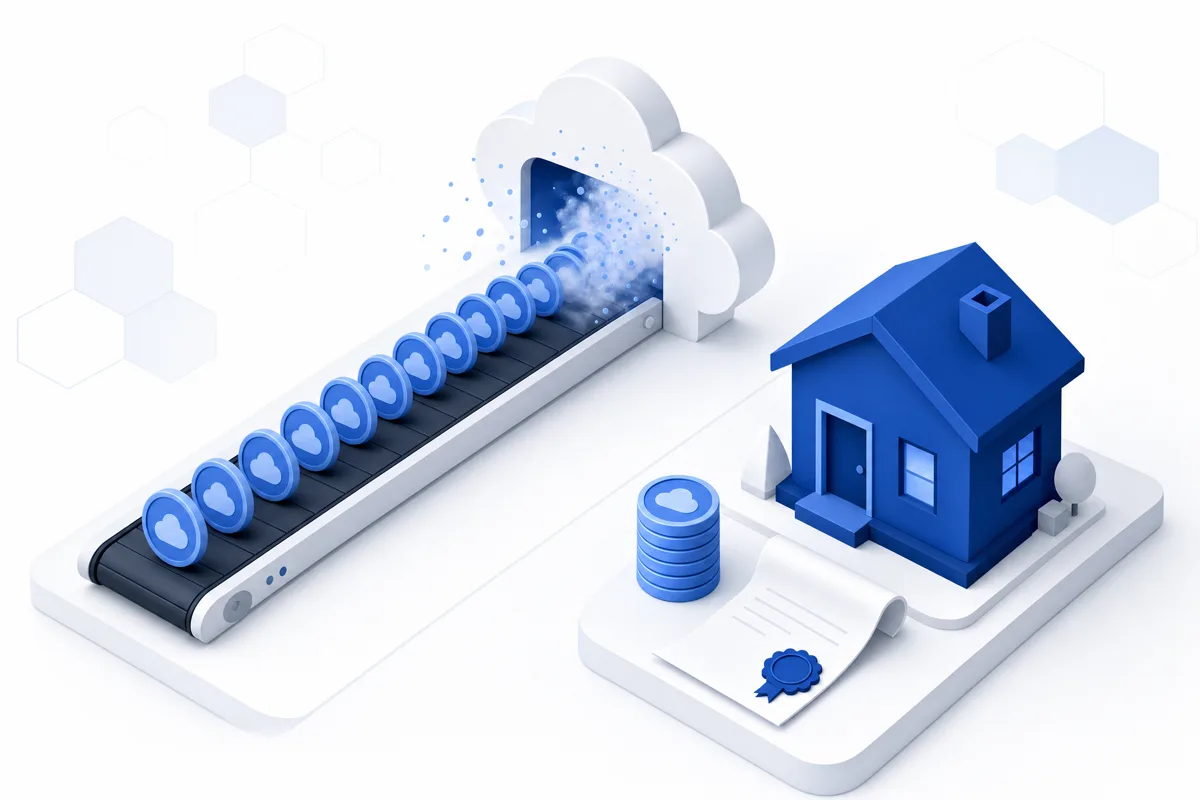
Short answer: owning wins when the software sits close to how your business competes, when you're paying for several subscriptions that each do part of the job, or when per-seat pricing has turned a tool into a tax on hiring. Renting wins for commodities. The interesting part is that the crossover point has moved — a long way.
Rent buys you nothing, forever
A typical Australian SMB now runs ten to twenty software subscriptions. Individually they look cheap; added up, a mid-sized business commonly spends $30,000 to $100,000+ a year on SaaS, growing with every hire because most tools price per seat. Three things make this worse than it looks on the invoice:
- It compounds. Renewal price rises of 5–15% a year are normal, and switching costs make them hard to refuse.
- It ends with nothing. Stop paying and the tool, the workflows and often the data's usefulness disappear. Ten years of fees builds zero asset value.
- The workarounds are invisible. When a tool does 70% of the job, staff bridge the other 30% with spreadsheets and re-keying. That labour never appears on the SaaS invoice, but you pay it every week.
What changed: the cost of building collapsed
Five years ago, custom software lost this comparison for most SMBs because builds started at $150,000 and took most of a year. AI-accelerated development changed the economics: a senior team now ships in weeks what used to take months. The judgement, architecture and accountability still come from experienced engineers — but the expensive mechanical middle of writing code has compressed dramatically. Custom software that businesses could never justify is now within reach, and the monthly cost of building and running it is frequently comparable to the subscription stack it replaces.
How to run the comparison honestly
- Add up the real rent. Subscriptions that would be replaced, multiplied by five years of fees and realistic price rises.
- Add the workaround labour. Hours per week your staff spend re-keying, reconciling and patching gaps between tools, at their real cost.
- Compare against ownership. A quoted build (or flat monthly retainer covering build, maintenance and releases), minus the asset you hold at the end — software your business owns outright.
When we run this with businesses, the surprise is rarely the build cost — it's line two. The workaround labour on an "almost fits" stack is routinely larger than the subscriptions themselves.
When SaaS should still win
Be equally honest the other way. Nobody should rebuild accounting (Xero, MYOB), email and documents (Microsoft 365, Google Workspace), payroll, or any commodity where your process is the same as everyone else's. Those products amortise enormous engineering across millions of customers; competing with that is how custom software gets a bad name. The build case lives in the awkward middle: quoting logic, job flow, trade pricing, operations — the processes that make your business your business.
The ownership test
One question cuts through most of the analysis: if this system disappeared tomorrow, would we want to rebuild it exactly our way? If yes, it's core process wearing a rented costume — and every month of rent is a month of not owning it. If no, keep renting it and spend your build budget where the answer is yes.